
Ullswater Valley: Rewilding & Invasives
Ullswater Valley: Rewilding Options
What should and shouldn’t be here
Following the last Glacial Maximum (Ice Age), as the ice sheets retreated from the deep troughs of the Lake District, the Ullswater valley began to breathe. Before the arrival of human settlers, the landscape was a dynamic mosaic of Oak, Birch, and Scots pine—interspersed with wetlands and high-altitude mountain heath. This was a place of immense biological complexity, where the interaction between Fungi, Flora, and Fauna was self-sustaining and robust.
Today, rewilding throughout the Lake District, and Cumbria as a whole, is a movement gaining massive momentum among a population that is becoming highly educated and ever more aware of the benefits of nature recovery. Surveys constantly show that the vast majority of people support the restoration of our lost natural heritage. This shift is driven by the clear ecological benefits: restoring keystone species repairs the broken cycles of the valley, improving soil health, and providing natural flood management. Furthermore, the financial benefits to locals are significant; a thriving, life-rich valley attracts high-value eco-tourism, such as kayaking on Ullswater, and creates jobs in habitat restoration and land management that far exceed the returns of the depleted monocultures of the past millennium.
Successful Precedents: Lessons from around Europe
To understand what is possible for Ullswater wildlife, we can look to these established nature-based solutions where the transition to ecological restoration has yielded tangible results:
-
Haweswater Reservoir (Cumbria, UK): Managed by the RSPB, this site has shown that reducing sheep numbers restores the natural sponge of the fells.
-
South of Scotland Golden Eagle Project: Successfully translocated over 30 eagles, sparking a raptor-based economy.
-
Cairngorms Connect (Scotland): A massive partnership project restoring habitats from river valley to mountain top.
- Carrifan Wildwood ( Southern Scotland ): Rescuing the wooded wilderness of the Southern Uplands that existed there for thousands of years before human activities became dominant.
-
The Oder Delta (Germany/Poland): A trans-boundary wilderness that has revitalised rural villages through sustainable hospitality.
-
The Millingerwaard (Netherlands): Removed dykes to allow natural flooding, solving flood safety issues for local residents.
-
The Iberian Highlands (Spain): Reintroducing vultures and lynx to prevent rural depopulation.
-
Wildwood Trust. Wildwood is a native species conservation charity established in 2002 to push the boundaries of innovative conservation and rewilding.
On the land: Lake District Predators and Engineers
Apex Predators
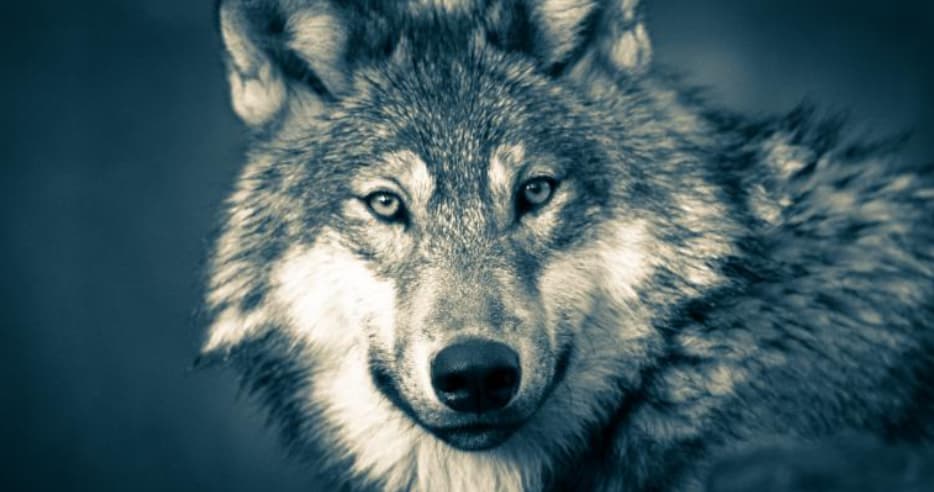
Eurasian Wolf (Canis lupus)
-
Likelihood of Return: 0/10 (for now)
-
The Reality Check: While wolves are one of the ultimate keystone species on land at this latitude, the 21st-century Lake District is too fragmented and busy. A sustainable population requires thousands of square miles of contiguous wilderness.
-
Sustainable Alternative: The Cairngorms National Park in the Scottish Highlands remains the only landscape in the UK with the sufficient scale and low human density to potentially harbour a self-sustaining population of roughly 150-170 wolves.
Eurasian Lynx (Lynx lynx)
-
Likelihood of Return: 0/10 (for now)
-
The Reality Check: Even the quietest parts of the Lake District lack the immense, unbroken scale required for a self-sustaining population of Lake District predators. While pockets like Ennerdale or Thirlmere could harbour individuals, the region remains an island of habitat.
-
The Border Prospect: Kielder Forest is often cited as the most suitable English release site. However, estimates suggest it could only support maybe 30 animals, which sits on the cusp of ecological viability.
-
Sustainable Alternative: The Galloway Forest and Southern Uplands in Scotland have the carrying capacity for roughly 50 Lynx, while the Scottish Highlands could potentially support 250.
Ecosystem Engineers
Wild Boar (Sus scrofa)
-
Likelihood of Return: 0/10 (for now) (around Ullswater)
-
The Reality Check: Due to high tourism, Ullswater is an unlikely site for release. However, Boar have reintroduced themselves via escapes in the Forest of Dean and parts of the Scottish Highlands, where they are already functioning as ecosystem engineers.
European Bison (Bison bonasus)
-
Likelihood of Return: 10/10 (Introduced in Cumbria)
-
The Reality Check: As of 2026, five European bison have been introduced on a trial basis onto a managed site at Castletown Estate up near the Solway Firth in Cumbria. They are not there to be visited. These massive ecosystem engineers are used to open up dense woodland canopies and restore natural processes through distinct, heavy impact behaviour.
Rather than knocking over mature trees, bison gently clear the undergrowth by forging pathways through dense scrub, rubbing their massive bodies against trunks to shed their thick winter fur, and selectively stripping bark from specific tree species. Crucially, they also roll on the ground to create massive “dust baths” or sand wallows. It’s a well known truism that there are no straight lines in nature, and that ‘ messy ‘ means life. This is exactly what these beautiful animals contribute.
- Like to know more about how they interact with the land ? Check out this video from the wonderful Leave Curious.
Eurasian Beaver (Castor fiber)
-
Likelihood of Return: 9/10
-
Benefit: The ultimate engineer for climate resilience. Their leaky dams slow water flow, providing a natural buffer that could protect infrastructure around Ullswater.
-
Ongoing Projects: Cumbria is currently at the forefront of beaver restoration with two primary focal points:
-
Lowther Estate: Since 2020, this site has hosted a successful scientific trial in a private 27-acre enclosure. As of 2026, the beaver family is thriving, demonstrating how quickly they can transform dry pasture into a lush wetland mosaic.
-
Wild Ennerdale: In a major milestone for 2026/7, the Wild Ennerdale partnership, which includes Forestry England has advanced plans for what could be the largest reintroduction in England to restore natural processes of the River Ehen catchment.
-
Eurasian Otter (Lutra lutra)
-
Status: Recovered naturally.
-
The Mink Conflict: For decades, invasive American Mink have been causing havoc in our waterways. Because the mink is a versatile, aggressive predator with no natural enemies here, it decimated local populations of Water Voles.
-
The Otter Solution: Otters act as riparian guardians through spatial competition. They drive mink away from the best territories and food sources. As otter populations have recovered, mink have been forced into less favourable, inland habitats where they are easier to control.
Water Vole (Arvicola amphibius)
-
Status: Reintroduced (2023-2026).
-
Benefit: Known as landscape gardeners, voles graze on over 200 different plant species. Their burrowing and feeding patterns promote a diverse mix of riparian vegetation, preventing any single plant species from dominating the bankside.
Pine Marten (Martes martes)
-
Likelihood of Return: 10/10 (Confirmed Breeding)
-
The Guardian of the Red Squirrel: Martens primarily hunt the heavier, slower invasive Grey Squirrel. Native Reds are lighter and can retreat to the thinnest outer twigs where a marten cannot follow.
-
Psychological Restoration: Their presence restores a natural psychological balance to the woods. Native Red Squirrels co-evolved with martens and possess an innate fear response to their scent, which keeps them alert and avoids risky foraging behaviour. Once again, as the Greys didn’t develop alongside the Martens, they don’t have that natural behaviour response and it’s a Grey Squirrel snack for the Marten.
In the sky: Lake District Predators & Scavengers
Golden Eagle (Aquila chrysaetos)
-
Likelihood of Return: 8/10
-
SSGP Support: Much of the credit for the eagle’s return to Cumbrian skies belongs to the South of Scotland Golden Eagle Project.
-
Sightings: While they have not yet re-established permanent territories in the valley, these majestic birds have already been the subject of occasional eye witness sightings once again over the crags and fells of Ullswater.
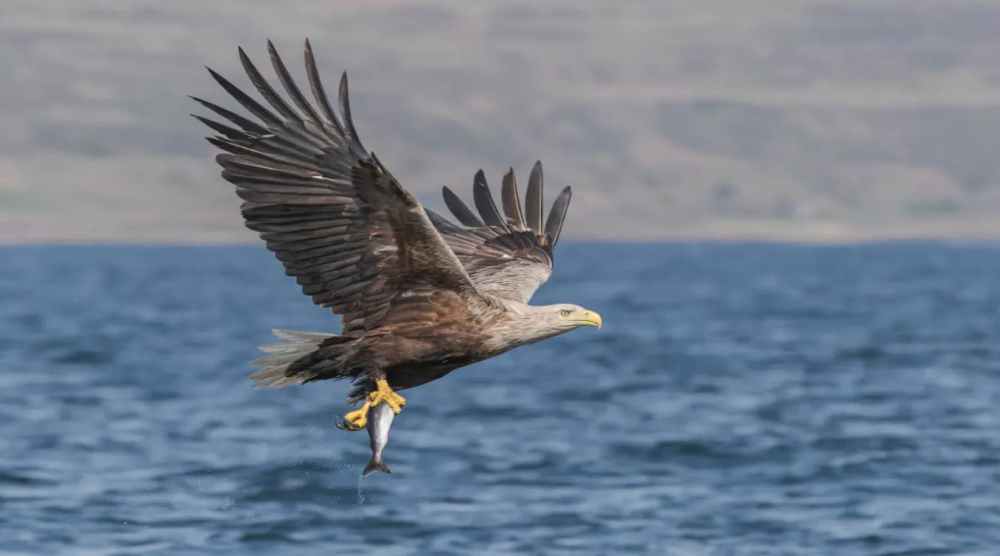
Sea Eagle / White-tailed Eagle (Haliaeetus albicilla)
-
Status: 2026 Reintroduction Proposals.
- A Strategic Link: The Cumbrian White-Tailed Eagle Project has identified the Northern Lake District as a vital corridor. As proposals suggest releasing a minimum of 66 of these stunning birds over a five year period, if such a scheme happens, there would be an excellent chance of observing them over Ullswater, and especially Haweswater Reservoir, as it’s far less populated, and ongoing rewilding projects are proving to be very successful there.
Mitigating Conflict: The Llama Solution
-
The Guarding Solution: To address concerns regarding potential livestock predation, farmers are turning to nature-based security. Where llamas have been employed, research has shown that livestock deaths can drop by up to 80%.
-
Camelid Diversity: The region has seen a surge in South American camelids. While similar, they fulfill different niches: Llamas are the large, brave guardians; Alpacas are smaller and prized for soft wool; and Guanacos are the slender, wild ancestors of the domesticated llama.
-
Abundance & Economics: Basecamp North Lakes alone is home to a herd of over 200 alpacas and llamas. Several other local sanctuaries now keep these species, providing a growing infrastructure for farmers. A castrated (gelded) male llama typically costs between £500 and £1,000. With an impressive working life span of 15 to 20 years, they provide a cost-effective, long-term solution for non-lethal predator control.
- Perspective on Losses : To put this into perspective, the vast majority of lamb deaths (historically 10-20% of all births) are caused by weather, disease, and welfare issues. In contrast, predation by birds like Sea Eagles, and much more common, but less sensationalised, Crows, represents a tiny fraction (often less than 1%) of total losses. General insurance schemes have also replaced contested individual claims in some areas.
Osprey (Pandion haliaetus)
-
Status: Established nesting pairs.
-
Nesting Sites: Bassenthwaite Lake remains the heart of their Lake District recovery. Watching an osprey dive for fish is a hallmark of a recovering wild landscape for anyone kayaking on a lake.
In the soil: Foundations
Mycorrhizal Fungi (The Wood Wide Web)
-
Role: These symbiotic fungi form vast underground networks that connect tree roots across the valley.
-
Nutrient Exchange: This ancient underground economy is the foundation of a healthy valley. Mycorrhizal fungi scavenge the soil for essential nutrients and deliver them directly to the roots. In exchange, the trees pay the fungi with sugar produced through photosynthesis. This trade is vital for survival in the thin, acidic soils of the fells.
Soil and Sheep
The direction is clear. More and more of the current stewards of the land around the Ullswater area are actively changing behaviours that have dominated the fells for the past 900 years. This modern shift prioritises a robust local supply chain over historical industrial models that focused more on exported lamb and sheep. Today, an ever-increasing number of local suppliers and restaurants are endeavouring to change the situation by championing the rise of local beef and venison. Crucially, local lamb and sheep farmers are still very much part of the collective; though they are now favouring local buyers where they can over the export trade that, unfortunately, used to dominate for centuries, ensuring that high-quality meat is reared, processed, and consumed within the community.
The Mediterranean Warning
The Lake District’s history mirrors parts of Greece and Spain, but at an accelerated pace. Intense sheep grazing, along with clearing forests through felling and fire, around these fells and dales has been one of the major causes of soil depletion and degradation, catching up to what took around 5,000 years to occur in the Mediterranean. This vegetation stripping transformed what was once a complex mosaic of scrub and woodland into the bare, treeless vistas we see today. While the resilient olive became a staple in those rocky Mediterranean landscapes, no such miracle would have saved these fells and dales if the topsoil had been allowed to erode further.
Nutrient Extraction
Upland sheep grazing functions as nutrient mining. Sheep consume nitrogen, phosphorus, and potassium to build bone and muscle. Because animals are sold off-site, these minerals are exported rather than recycled. The remaining sheep’s manure alone cannot correct this imbalance. Furthermore, artificial fertilisers cannot bridge the gap on high fells and often increase soil acidity, leaving the terrain chemically fragile.
Hefting and Waste
Sheep stay in specific areas because they are hefted to the land—a learned instinct to stay on their own patch of the fell. This causes sheep to bunch together, leading to heavy overgrazing in some spots while others are ignored. Because they don’t roam evenly, their manure is concentrated in small areas. This creates islands of waste that pollute the soil with too much nitrogen, surrounded by vast seas of land that are stripped of minerals and life.
Soil Compaction
High sheep density causes the Stiletto Effect, where hoof pressure reduces soil porosity and limits absorption. Additionally, sheep create trods—compacted paths—that act as drainage channels. During rain, these accelerate runoff, bypassing the vegetation sponge. This rapid water movement increases erosion and flash flooding risks. Reducing grazing pressure allows soil to de-compact and mosses to return.
Cattle versus Sheep
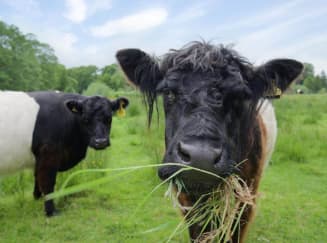
Stewards are increasingly reintroducing cattle via mob grazing to create a healthier mosaic of habitats. Unlike sheep, which graze close to the ground, cattle are more selective, often targeting specific tall grasses and coarse vegetation. Their method of tearing rather than surgical cutting leaves a varied sward height. Furthermore, a cow’s significant weight can act as a restorative force if their movements are well managed; their heavy, wide, hooves break through thick thatch to create patches of bare earth. These disturbed pockets serve as vital nursery sites, allowing dormant seeds to finally germinate and restore botanical diversity.
Deer around Ullswater
In the absence of natural predators like wolves or lynx, deer populations—particularly Red Deer—have reached large numbers across the Lake District. Without the landscape of fear that predators once provided, deer are free to over browse young saplings and delicate flora across the fells. This lack of natural regulation makes active management and the promotion of local venison essential to prevent these herds from further stripping the vegetation and hindering the natural regeneration of the woodland.
While the iconic native Red Deer make up the largest presence around Ullswater—with a historic herd numbering in the hundreds around Martindale and the eastern fells—they are not the only species present. Native Roe Deer are widely distributed in the surrounding valley woodlands, while non-native species such as Sika, Fallow, and increasingly Reeves’ Muntjac are expanding across various pockets of the broader Lake District landscape.
To address this growing ecological challenge, regional partners officially launched the Lake District Wild Deer Management Strategy on May 21, 2026. Built on a collaborative foundation between landowners, the National Park Authority, environmental groups, and local deer managers, the strategy operates across five key pillars: Communication, Collaboration, Data & Evidence, Adaptability, and the Lake District Venison Brand. Its processes combine advanced monitoring technology—such as drone thermal imaging, foot counts, and woodland impact assessments—with flexible, landscape-scale culling. The ultimate aim is to regulate deer populations at ecologically sustainable levels, enabling native woodland regeneration, protecting vulnerable habitats, and building a sustainable supply chain for wild local venison.
Policy and Restoration
Local stewards are taking on board the evidence, replacing sheep with cattle and allowing more and more of the land to recover. The Environmental Land Management (ELM) scheme supports this by rewarding “public goods” like soil health. While these actions certainly help rectify past mistakes, history reflects a recurring pattern: Local tenant families once again face the consequences, exiting the land because some tenancies are not being renewed during this transition.
The Invasives: Species That Shouldn’t Be Here
-
American Mink: A ruthless predator responsible for the local extinction of Water Voles.
-
Grey Squirrel: Carries Squirrel Pox (fatal to Reds) and damages native broadleaf trees.
-
Signal Crayfish: Carries plague that kills native crayfish and erodes riverbanks.
-
Rhododendron: Blocks all light and poisons the soil.
Trophic Cascades: The Ripple Effect of Restoration
Rewilding is fundamentally about Trophic Cascades—the phenomenon where a change at the top of the food chain trickles down to restructure the entire ecosystem.
-
Predation & Fear: Deer move frequently and avoid over-grazing sensitive valley floors.
-
Vegetation Release: Native Flora—oak, rowan, and Aspen—finally grows past the browse line.
-
Soil Stabilization: Young woodlands anchor the soil, preventing erosion into Ullswater and protecting peat bogs.
-
Biodiversity Net Gain: Healthy forests and soils support a surge in insect and bird life.
Conclusion: A Legacy Restored
Ullswater Valley rewilding is the most practical path toward a sustainable future for the catchment. By moving away from the medieval sheep factory model, we allow the three domains of Fungi, Flora, and Fauna to function as they did for millennia. This restoration provides essential climate adaptation while offering a nature-based economy, where visitors can experience a truly wild landscape, perhaps through a quiet morning of kayaking among the hidden bays and restored shorelines. Restoring the life once present is an investment in the valley’s survival for both the ecology and the people who call it home.