
Ullswater Steamers and Two Women of Steel
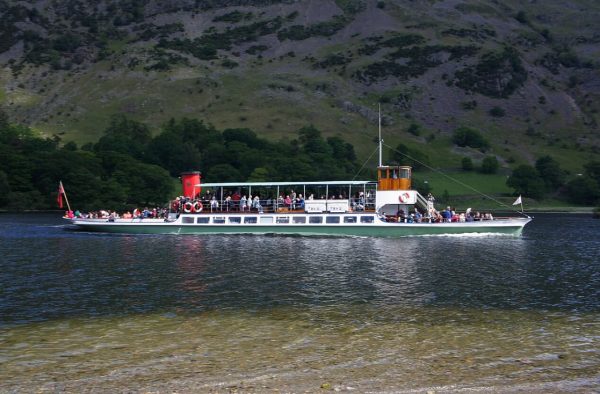
Mary Mushet, Lady of the Lake, and Raven
How a 16-Year-Old Girl in 1866 Won What Her Father Deserved
In December 1866, a 16-year-old girl named Mary Mushet boarded a train alone from the Forest of Dean to London on an extraordinary journey.
Her father, metallurgist Robert Forester Mushet, was bedridden, insolvent, and facing financial ruin after his business trustees allowed his patent to lapse. Meanwhile, industrialist Henry Bessemer was amassing a fortune using her father’s steel-refining formula.
In an era when young people—and women especially—were expected, and usually forced, to accept their lot, keep quiet, and defer to authority, Mary refused. She took matters into her own hands, travelled to London alone, and walked straight into Bessemer’s offices. In a brief meeting lasting only a few minutes, she confronted the powerful industrialist face-to-face, holding her ground and demanding the financial justice her father was rightfully owed. Although Bessemer did not concede in public that Mushet had a legal claim, the writing was on the wall, and Mary’s sheer determination paid off: within months of her visit, Bessemer began paying her father an annual pension of £300 a year—an exceptionally substantial sum (roughly £40,000 to £45,000 in purchasing power today) that won her father the financial security and recognition he truly deserved, sustaining him for the rest of his life.
From Mary’s Determination to the Steel Age
By standing up to one of Britain’s most powerful men, Mary won vital recognition for her father’s work. Her father’s crucial breakthrough was discovering that adding spiegeleisen—a manganese-rich iron alloy—to Bessemer’s newly refined metal could remove the remaining oxygen and restore the carbon and manganese needed to produce reliable steel suitable for large-scale engineering like ship hulls.
Two Generations of Shipbuilding on Ullswater
Even after Mary succeeded in 1866, it took time for steel production to scale up, drop in price, and gain the full trust of shipyards over reliable wrought iron. That shift from iron to steel is frozen in time on Ullswater:
-
Lady of the Lake (1877): Built by Thomas Seath & Co. on the River Clyde 11 years after Mary’s trip, it was constructed with a heavy wrought-iron hull while steel manufacturing was still ramping up. It is believed to be the UK’s oldest working passenger vessel.
-
Raven (1889): Built 12 years later by the very same shipbuilder, Seaths, but with a steel hull. By then, the Bessemer process and the improvements that made it commercially successful had transformed steel production, allowing it to be lighter, stronger, and faster. And one of the crucial steps that made that transformation possible had been discovered by a father whose daughter secured his legacy.
Both vessels were constructed at Seaths’ shipyard, shipped in sections by rail to Penrith, and reassembled at Pooley Bridge. Every time Raven glides across Ullswater, it carries a piece of that industrial revolution with it—a revolution in which Robert Mushet played a crucial part, and in which his remarkable 16-year-old daughter Mary refused to walk away without winning the recognition and justice her father deserved.
The Lineage of Steel: From Mary Mushet to Constance Tipper
The story of women, steel, and shipbuilding does not end with Mary Mushet securing her father’s place in metallurgical history. Less than a century later, another defiant woman would step into the world of metallurgy to rescue the world’s steel fleets when they faced catastrophic failure.
During World War II, the United States built over 2,700 mass-produced, all-welded steel cargo vessels known as Liberty ships to supply the Allied war effort across the freezing North Atlantic. But an alarming crisis emerged: without warning, these massive steel ships began splitting in two in frigid Arctic waters, dropping anchor in ports with deep structural cracks spreading through their hulls.
Military bosses and shipbuilders initially blamed poor welds or sabotage, but the true culprit remained a terrifying mystery—until Cambridge metallurgist Dr. Constance Tipper was called in to investigate.
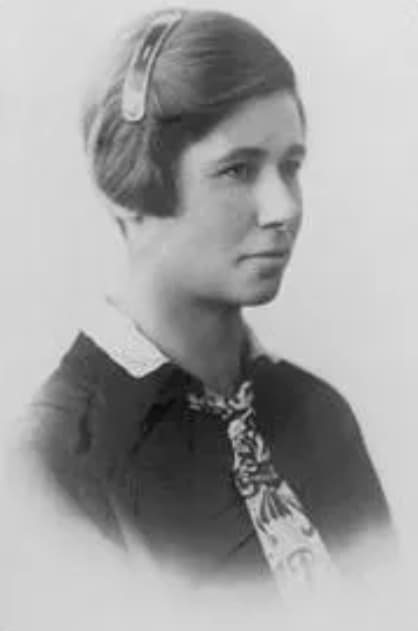
The Woman Who Saved the Liberty Ships
Constance Tipper was no stranger to male-dominated institutions trying to marginalize her. In 1923, when she co-authored groundbreaking research that won the Royal Society’s prestigious Bakerian Medal, she was banned from attending the celebratory dinner because women were not permitted in the dining club.
Undeterred by institutional prejudice, Tipper proved them all wrong. Through rigorous experimentation, she discovered that the steel used in Liberty ships underwent a ductile-to-brittle transition in low temperatures. Below a critical freezing point, steel that was normally flexible and tough acted like glass, allowing microscopic cracks to propagate at speed across entire welded hulls.
Tipper developed the “Tipper Test” to measure steel’s brittleness under cold conditions—a test that remains an international standard in metallurgy and naval engineering to this day. Her discovery forced shipbuilders to change steel formulations and alter shipyard construction, preserving the fleet that helped win the war.
A Lakeland Legacy
Remarkably, the connection between these two extraordinary women comes right back to the shores of Ullswater. After retiring as the first full-time female faculty member at Cambridge Engineering, Dr. Constance Tipper spent her remaining decades living quietly in Langwathby, near Penrith, a twenty minutes drive away from Ullswater, until her death in 1995 at the age of 101.
The thread connecting Mary Mushet’s 1866 journey to London and Constance Tipper’s 1940s laboratory tests is one of uncompromising grit. Both were women who refused to let male-dominated power structures dictate the truth. One fought for her father so he received due credit; the other fought to understand steel when the fate of the world depended on it.
When you paddle past Raven on Ullswater, you aren’t just looking at a late 19th century vessel. You are looking at the living story of steel—a material shaped, refined, and saved by women who refused to back down.