
Trees around Ullswater
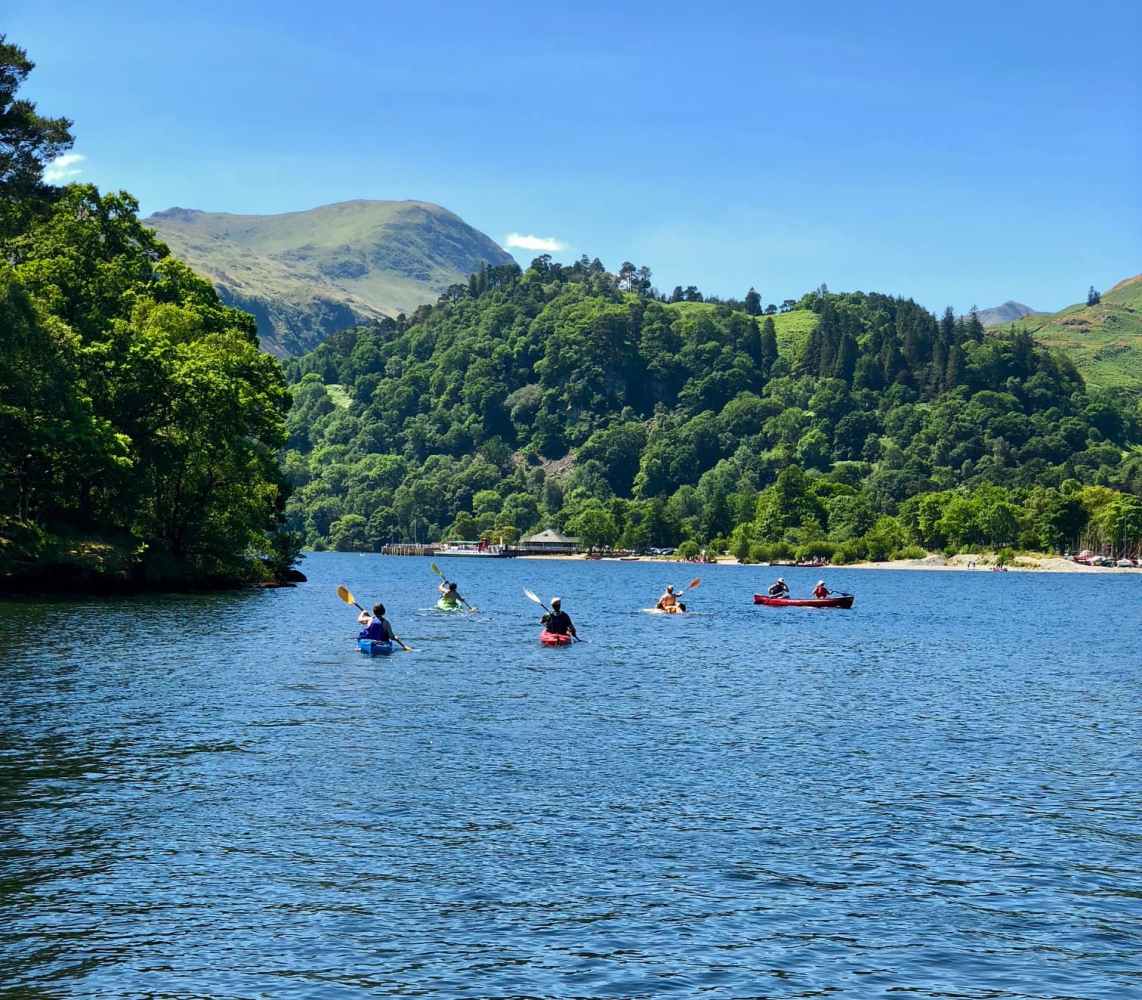
Ullswater is often called England’s most beautiful lake, a ribbon of blue winding beneath the dramatic hills of St. Sunday Crag and Place Fell. While the water captures the eye, the soul of the landscape resides in its trees. From the ancient “Noble” survivors of Celtic law to the rugged pioneers that first reclaimed this land after the ice retreated, the arboreal history of Ullswater is a story of resilience, human partnership, and biological wonder.
After the Ice: The First Pioneers
Around 10,000 to 12,000 years ago, as the glaciers of the last Ice Age melted, the Lake District was a barren tundra of scoured rock and glacial till. These were the first species to colonize the raw earth.
Silver Birch (Betula pendula)
-
Arrival: Circa 10,000 BC.
-
Celtic Status: Known as the Bright One of the Woods, representing light and purification.
-
Terrain: Thrives in light, sandy soils; shimmering on the slopes of Gowbarrow Park.
-
Human Use: Its bark contains oils that make it a perfect fire starter, even when wet. In Cumbria, it was the primary wood for the bobbin mills that fuelled the textile revolution.
-
Animal Use: The open canopy allows light for woodland floor plants. Woodpeckers often drum on older, softer trunks to find insects.
-
Related to: The Alder and Hazel trees (both in the Betulaceae family).
-
Biology: Monoecious—both male and female flowers (catkins) are found on the same tree.
Downy Birch (Betula pubescens)
-
Arrival: Circa 10,000 BC.
-
Terrain: Unlike its silver cousin, it loves the damp, boggy edges of the lake.
-
Human Use: Used for tanning leather and making waterproof roofing for early shelters.
-
Animal Use: A favorite nesting spot for Chaffinches and Willow Warblers, who use the fine twigs for cover.
-
Related to: Hazelnuts and the common Alder.
-
Biology: Also monoecious.
Goat Willow (Salix caprea)
-
Arrival: Circa 10,000 BC.
-
Celtic Status: A “Commoner” of the wood.
-
Terrain: Loves “wet feet”—found in scrubby, damp areas and lakeside margins.
-
Human Use: The bark contains salicin, which the body converts into salicylic acid (the active ingredient in aspirin).
-
Animal Use: One of the most important early-spring nectar sources for Honeybees and the Peacock Butterfly.
-
Related to: Poplar trees and the Cottonwood.
-
Biology: Dioecious. Male and female catkins (“pussy willow”) grow on separate trees.
Juniper (Juniperus communis)
-
Arrival: Circa 10,000 BC.
-
Human Use: The berries are used to flavor gin and were historically burnt to “cleanse” houses of illness.
-
Animal Use: Provides dense, prickly cover for Field Mice and nesting sites for Robins.
-
Related to: Cypress trees and Cedars.
-
Biology: Dioecious. You need a male and female plant nearby for the female to produce berries.
Scots Pine (Pinus sylvestris)
-
Arrival: Circa 9,000 BC.
-
Celtic Status: Noble. One of the Airig Fedo.
-
Animal Use: The primary home for the Red Squirrel. They use the high branches for their nests (dreys) and eat the pine nuts as a winter food source.
-
Related to: Fir trees, Spruces, and the Larch.
-
Biology: Monoecious, bearing both small yellow male cones and larger woody female cones.
The Chemistry of Happiness
The Scots Pine is a chemical powerhouse. It releases Volatile Organic Compounds (VOCs), primarily alpha-pinene and beta-pinene. These serve as the tree’s immune system, but for humans, they act as bronchodilators (opening the lungs) and anti-inflammatories. Research shows these VOCs lower cortisol (the stress hormone) and boost Natural Killer (NK) cells, leading to a measurable state of physiological “happiness.”
The Guardians of the Glen
As the climate warmed, the Guardians—the high-ranking trees that provided the most value to the tribe, began to establish themselves.
Sessile Oak (Quercus petraea)
-
Arrival: Circa 7,000–6,000 BC.
-
Celtic Status: The Mother of the Woods. The most sacred of the Guardians.
-
Why the “Mother”? The Oak is the long-lived anchor of the ecosystem. It supports more life than any other native tree, acting as a maternal host for a vast community.
-
Animal Use: A single mature Oak can support over 2,300 species. Barn Owls and Bats roost in its hollows, while Jays bury acorns all over the valley.
-
Human Use: Beyond construction, its galls made permanent black ink for medieval manuscripts, and its wood was the preferred fuel for early iron smelting.
-
Related to: Beech and Chestnut trees (the Fagaceae family).
Hazel (Corylus avellana)
-
Arrival: Circa 8,000 BC.
-
Celtic Status: Noble. The tree of wisdom and poetic inspiration.
-
Animal Use: Nuts are a staple for Grey and Red Squirrels and Dormice.
-
Human Use: Essential for “coppicing” to make baskets, garden hurdles, and walking sticks.
-
Related to: Birches and the Hornbeam tree.
-
Biology: Monoecious. Look for “lambs’ tails” (male catkins) in late winter.
Common Alder (Alnus glutinosa)
-
Arrival: Circa 7,000 BC.
-
Celtic Status: Noble. Respected because its wood resisted decay and its sap “bled” red like a human when cut.
-
Animal Use: Its roots provide underwater hiding spots for Otters and Kingfishers.
-
The Foundation of Venice: Submerged in water, Alder becomes as hard as stone. Because of this, the city of Venice was built on millions of Alder piles driven into the lagoon mud. Locally, as clogs began to replace pattens as standard footwear, Alder was the wood of choice, being abundant along the many becks in the area.
-
Related to: The Birch tree family.
Rowan (Sorbus aucuparia)
-
Arrival: Circa 8,000 BC.
-
Celtic Status: Noble. Known as the Mountain Scout.
-
Animal Use: The bright red berries are a vital winter feast for Blackbirds and Thrushes.
-
Related to: Roses, Apples, Pears, and Strawberries (the Rosaceae family).
-
Biology: Hermaphrodite. Each individual flower contains both male and female parts.
Common Ash (Fraxinus excelsior)
-
Arrival: Circa 5,500 BC.
-
Celtic Status: Noble. Valued for its tough, elastic wood.
-
Animal Use: Seeds (keys) are eaten by Bullfinches in winter.
-
Human Use: The ultimate wood for tool handles (axes, hammers) because it absorbs shock without splintering.
-
Related to: Olive trees, Jasmine, and Lilacs.
-
Biology: Polygamous. A single tree can change its “sex” annually.
Holly (Ilex aquifolium)
-
Arrival: Circa 6,000 BC.
-
Celtic Status: Noble. Valued for its evergreen protection.
-
Animal Use: Provides vital winter cover for Wrens and Song Thrushes during Lakeland storms.
-
Related to: Yerba mate and various ornamental tea-shrubs.
-
Biology: Dioecious. Only female Holly trees produce the iconic red berries.
Hawthorn (Crataegus monogyna)
-
Arrival: Circa 6,000 BC.
-
Animal Use: Known as the “larder” of the woods. Provides thorns for Small Birds to nest safely away from predators.
-
Human Use: Historically used to create “living fences” (hedgerows) to contain livestock.
-
Related to: Roses, Cherries, and Blackberries.
-
Biology: Hermaphrodite.
Yew (Taxus baccata)
-
Arrival: Circa 7,000 BC.
-
Celtic Status: Noble. Representing eternity.
-
Animal Use: Badgers often forage beneath them, and Thrushes eat the red arils (seeds).
-
Related to: The Plum Pine (though loosely related, it is in its own distinct ancient lineage).
-
Biology: Dioecious. Only the female trees produce the fleshy red “arils.”
The Newcomers and Shapers of Today
Common Beech (Fagus sylvatica)
-
Arrival: Circa 4,000 BC.
-
Animal Use: In “mast years,” the forest floor is covered in nuts that feed Deer and Wood Pigeons.
-
Human Use: Prized for being steamed and bent for chair making. Found in parklands like the Glencoyne estate.
-
Related to: Oak trees and Sweet Chestnuts.
-
Biology: Monoecious.
Sycamore (Acer pseudoplatanus)
-
Arrival: Circa 1500s AD.
-
Terrain: Extremely hardy; survives the salt spray and winds of the exposed fells.
-
Animal Use: Broad leaves host aphids, which attract huge numbers of Blue Tits and Coal Tits.
-
Human Use: Its wood is “clean” and doesn’t taint food, making it the choice for dairy utensils and traditional “love spoons.”
-
Related to: Maples, Horse Chestnuts, and—surprisingly—Lychees.
-
Biology: Hermaphrodite, producing winged “helicopter” seeds.
The Hidden Network Beneath Your Feet
The Wood Wide Web is a mycorrhizal network—a symbiotic relationship between trees and specialized fungi.
Understanding the Symbiotic Trade
The relationship is a masterclass in mutual aid. Trees provide sugars, and fungi provide minerals.
-
The Trees Provide: Roughly 20-30% of their sugar (carbon) to feed the fungi.
-
The Fungi Provide: A vast web of mycelium that delivers three critical nutrients:
-
Nitrogen (N): For leaf growth and protein.
-
Phosphorus (P): For DNA and energy transfer.
-
Potassium (K): For water regulation and “breathing.”
-
The Sessile Oak and Scots Pine are the heavy users of this network at Ullswater, relying on it to survive the nutrient-poor, acidic slopes of the fells.
The Ancient Justice: Brehon Law and the Carvetii
Long before modern conservation, the trees of Ullswater were protected by Brehon Law, a sophisticated Celtic legal framework. In this region, these laws were upheld by the Carvetii, the Brittonic Celtic tribe whose territory encompassed the Eden Valley and the Ullswater fells.
For the Carvetii, the forest was a community with its own legal standing. The “Law of the Neighborhood” (Bechbretha) mirrored their own social hierarchy. To destroy a tree was to disrupt the cosmic and social balance of the tribe. Penalties were paid in eraic (restitution), usually measured in livestock.
The Arboreal Fine List
If a person was caught felling or “killing” a tree, the fines were steep. Under the tradition the Carvetii adhered to, the restitution was based on the tree’s rank:
-
The Guardians (Airig Fedo)
-
Trees: Oak, Hazel, Yew, Ash, Pine
-
Fine for Felling: 5 Milk Cows
-
-
The Commoners (Aithig Fedo)
-
Trees: Alder, Birch, Rowan, Willow
-
Fine for Felling: 1 Milk Cow
-
-
The Lower Divisions (Fodla Fedo)
-
Trees: Hawthorn, Holly, Juniper
-
Fine for Felling: 1 Heifer (A young female cow)
-
-
The Shrubs (Losa Fedo)
-
Trees: Bracken, Gorse, Heather
-
Fine for Felling: 1 Sheep
-
Note: Damaging the branches or the roots carried additional specific fines, often a heifer for the Guardians.
By treating the Sessile Oak or Hazel as a high-ranking member of society, the Carvetii ensured the fells remained a “managed” wilderness rather than a depleted resource.
Closing Reflection
To walk the shores of Ullswater, or paddle its waters, is to move through a living timeline. From the shimmering Birches that first greeted the warming sun to the ancient, maternal Oaks that anchor the soil today, these trees are more than just scenery. They are the chemical healers, the historical foundations, and the silent witnesses to ten thousand years of life in the valley. When you stand beneath their boughs, you are standing in the company of Guardians. If all this has whetted your appetite for more trees, there is an arboretum ( a living tree museum ) on the western shore of Ullswater at Aira Force. It’s a lovely place for a wander for a few hours.