
Birds that you might see while kayaking on Ullswater
Ullswater is a lake that rewards slow looking. The fells shift colour with the seasons, the water mirrors every mood of the sky, and the birds that live around the lake follow a rhythm older than any footpath or farm wall. While most visitors notice the obvious signs of spring — lambs in the fields, longer evenings, the first warm day that feels like a promise — the birds of Ullswater have already begun their preparations for the breeding season long before anyone feels warm again.
Understanding when different species pair up, mate and raise their young adds a whole new layer to time spent kayaking on Ullswater. Whether you’re paddling past a reedbed, drifting under an oak canopy or watching the ripples near a boathouse, there’s always something happening in the bird world. This guide takes you through the year, showing how Ullswater’s birds court, nest and raise their families — a natural calendar unfolding quietly around the lake.
January and February: Early Pairings and Winter Territory
Winter on Ullswater feels still, but for some birds the breeding season begins astonishingly early.
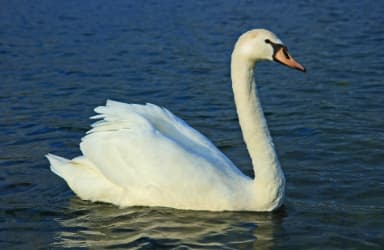
The Mute Swan is one of the first to recommit to its partner. Swans form long‑term pair bonds, and by January or February you’ll often see them swimming side by side, mirroring each other’s movements. These early months are about strengthening the pair rather than nesting, but the intention is clear. Swans are highly territorial, and paddlers often notice the male “busking” — puffed up, wings arched, gliding with purpose. It’s not aggression for the sake of it; it’s simply a clear message that this stretch of water is his responsibility.
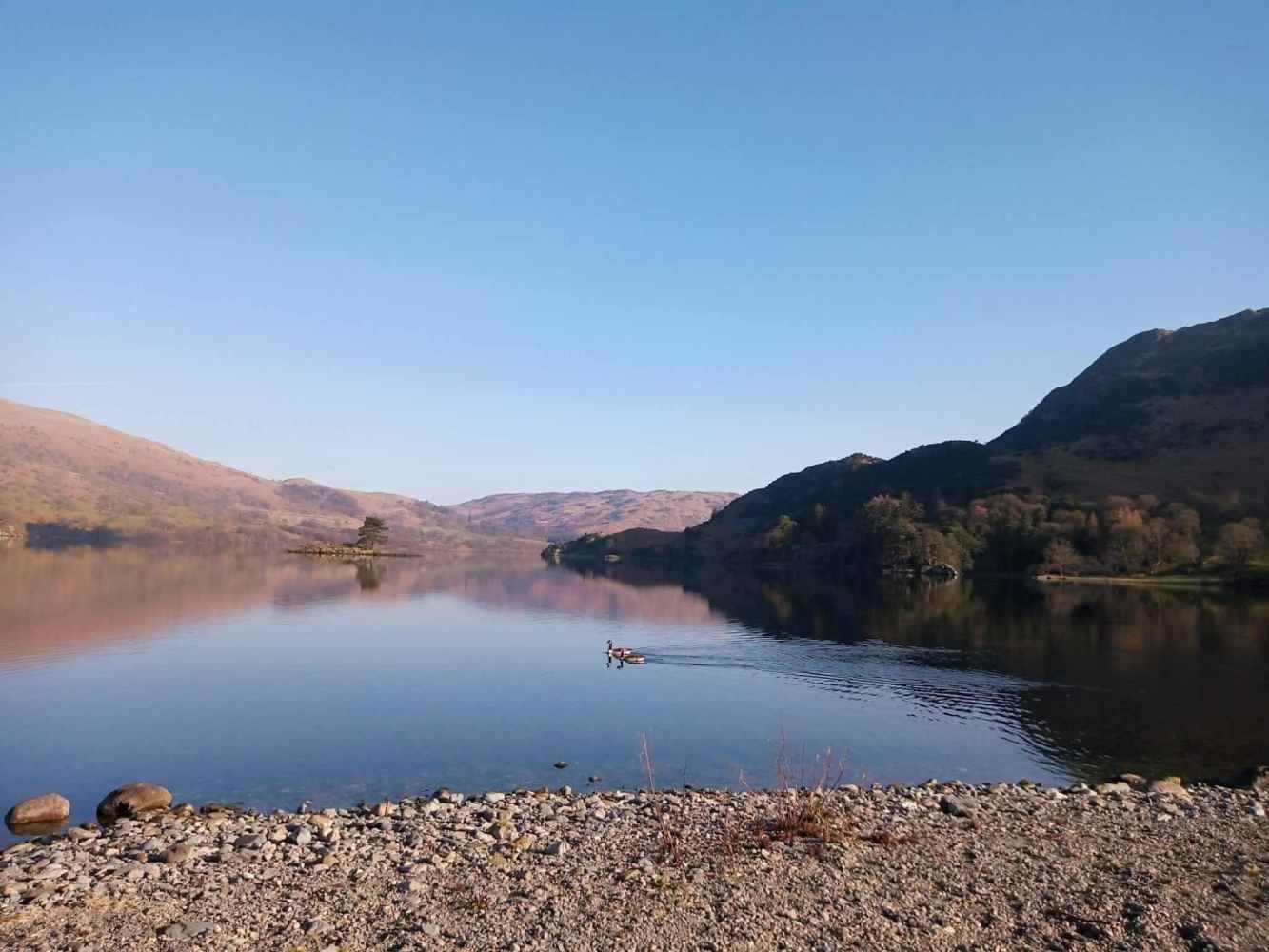
The Canada Goose also begins pairing in late winter. They’re vocal, social and very visible on Ullswater, often gathering in groups on the shoreline. Their honking calls are part communication, part reassurance, and part territorial claim. By February, pairs are forming and scouting nest sites, usually close to the water’s edge.
The Buzzard is a constant presence in winter. Its mewing calls echo across the valley, and you’ll often see it circling above the fells, riding thermals even on cold days. Buzzards begin courtship displays in February, with pairs soaring together in wide, lazy spirals.
Ravens begin nesting now too, often on inaccessible crags high above the lake. Their deep, croaking calls carry across the valley on cold mornings.
Gulls are active throughout winter. The Herring Gull is the most noticeable — large, confident and vocal. They patrol the lake in small groups, loaf on jetties and boathouses, and follow any disturbance that might reveal food. Black‑headed Gulls and Lesser Black‑backed Gulls appear occasionally, especially in colder months.
Owls are active now as well. The Tawny Owl is the classic voice of Ullswater’s winter nights — the deep “hoo‑hoo‑hoo” echoing through woodland. The Barn Owl, ghost‑pale and silent, hunts the valley edges at dusk, quartering fields and rough grassland.
Winter is a surprisingly vocal season. With fewer leaves to muffle sound, the calls of Buzzards, Ravens and owls travel far across the water.
March: The First Real Signs of Spring
March is when Ullswater starts to wake up. The light changes, the first insects appear, and suddenly the air is full of birdsong.
The Blackbird and Song Thrush begin their courtship now. The Blackbird’s mellow, flute‑like phrases and the Song Thrush’s repeated motifs are among the first true sounds of spring. They sing early and loudly because they’re establishing territory before competition increases.
The Wren, tiny but astonishingly loud, also begins pairing in March. The male builds several “cock nests” and the female chooses her favourite. Wrens sing with explosive energy — a burst of trills and rattles that seems impossible from such a small bird.
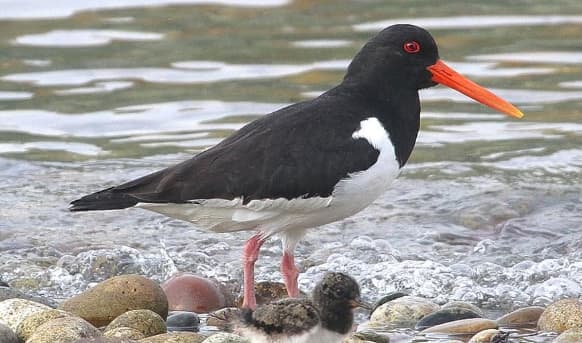
The Oystercatcher returns to the lake around this time. Its piping calls carry across the water, and its black‑and‑white body is unmistakable as it patrols the shoreline. Oystercatchers are fiercely territorial, and paddlers often hear them long before they see them. If an oystercatcher is shouting at you, it’s not personal — it’s simply letting you know you’re near its patch.
Raptors become more active now. Buzzards display more frequently, Red Kites drift through the valley on calm days, Sparrowhawks begin their fast, low hunting flights, and Peregrines may be seen high above the fells.
March is one of the noisiest months on Ullswater — birds are establishing territory, attracting mates and defending their patch. The soundscape is full of urgency.
April: The Lake Comes Alive
April is the true beginning of the breeding season for most species around Ullswater.
Mallards mate in March and April, and by now the females are tucked away in reeds, brambles or even the odd flowerpot, incubating their eggs.
Blue Tits and Great Tits begin nesting in earnest, timing their breeding to coincide with the explosion of caterpillars in late April and May. Their calls — the Great Tit’s “teacher‑teacher” and the Blue Tit’s scolding chatter — are constant in woodland.
Along the becks, Dippers and Grey Wagtails are already feeding chicks. These species start early because their food — aquatic insects — becomes available sooner than woodland caterpillars.
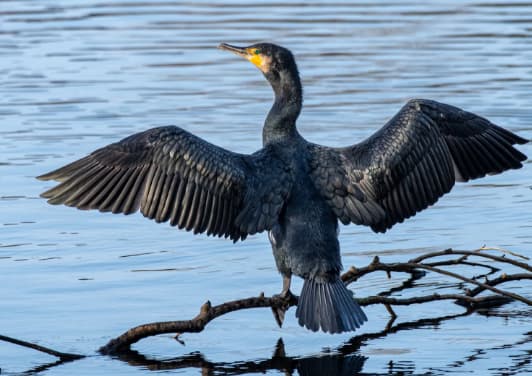
The Cormorant is also active now. Ullswater has quite a few, and they’re easy to spot while paddling along: long‑necked silhouettes perched on rocks or posts, wings spread to dry. They nest in colonies elsewhere but feed heavily on the lake in spring, diving with effortless precision.
The Heron is a regular sight — slow, deliberate and prehistoric. They nest in heronries in nearby woods, but they hunt the shallows of Ullswater year‑round. Spring is when you see them most often, standing motionless at the water’s edge, waiting for the perfect moment to strike.
Woodpeckers become more noticeable now. The Great Spotted Woodpecker drums loudly on resonant branches, while the Green Woodpecker calls from meadows and open woodland.
April is also when the warblers arrive. Chiffchaffs with their rhythmic “chiff‑chaff” and Willow Warblers with their dreamy descending song fill the woods with sound.
May: Peak Nesting Season
May is the busiest month of all. Almost every species is either incubating eggs or feeding young.
Mute Swans usually lay in April, and by May the female is deep in incubation while the male stands guard. Their nests — huge mounds of reeds and vegetation — are often visible from the water, but always give them space.
Canada Geese also have goslings by May. You’ll often see family groups grazing along the shoreline, the adults keeping a watchful eye while the young peck at grass and learn the basics of being a goose. Canada Geese are attentive parents, and their family groups often merge into larger “creches” where several adults supervise a crowd of goslings.
Oystercatchers are in full voice now, defending their nests with passion. Their alarm calls are one of the defining sounds of Ullswater in late spring.
Buzzards and Red Kites are often seen carrying nesting material or food. Peregrines may be spotted high above the fells.
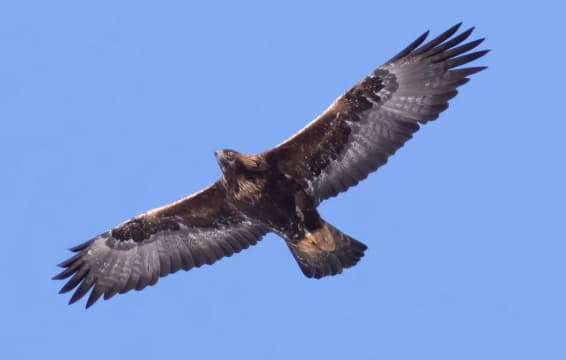
And every so often, a young Golden Eagle from the South of Scotland reintroduction project drifts down into the Lake District. These wandering juveniles explore widely, and Ullswater’s open slopes and high ridges offer perfect hunting ground.
May is also peak birdsong season. Blackcaps, Garden Warblers, Whitethroats and Sedge Warblers all add their voices. The woods feel alive with sound.
June and July: Summer Visitors and Second Broods
By June, the lake feels full of life. Young birds are everywhere — fledgling robins hopping through bracken, juvenile wagtails chasing insects along the shore, and young mallards venturing out into the world.
The Swallow, House Martin and Swift arrive in force. They skim low over the water, scooping insects from the surface with astonishing agility. Their constant chatter and screaming flights are one of the great joys of early summer.
Woodpeckers are feeding young now, and you may hear the chattering calls of fledgling Great Spotted Woodpeckers as they follow their parents through the trees.
Many species begin second broods: Blackbirds, Robins, Wrens and sometimes Great Tits.
Gulls are active throughout summer, especially Herring Gulls. They patrol the lake for fish, insects and scraps, and their loud calls are part of Ullswater’s summer soundtrack.
Summer is quieter for song — most birds have finished establishing territory and are now focused on feeding young. But Swallows and House Martins remain vocal around their nests, and Wrens continue to sing sporadically.
August and September: A Softer Rhythm
By late summer, the frenzy of breeding is over. The birds become quieter, the young disperse, and the lake settles into a calmer rhythm again.
Swans and geese moult, oystercatchers gather in small groups, and the woodland birds begin to form loose flocks. Swallows and martins prepare for migration, feeding intensively over the water.
Cormorants gather in larger numbers now, often roosting communally on favoured rocks or trees. Herons continue their patient hunting, and gulls remain active well into autumn.
The soundscape softens. Instead of full song, you hear contact calls, begging calls from late broods, and the occasional burst of Wren or Robin song as they re‑establish winter territories.
It’s a lovely time to paddle — the lake is warm, the days are long, and the birds are simply getting on with life.
Which Birds You’ll Hear Singing — and Why
Ullswater has a wonderfully predictable soundscape through the year. Here’s what guests will most often hear:
Late winter (January–February)
- Tawny Owl — classic “hoo‑hoo‑hoo” at night
- Song Thrush — one of the earliest daytime singers
- Robin — sings year‑round, but especially in winter
Early singers defend territory before competition increases.
Early spring (March–April)
- Blackbird — rich, mellow evening song
- Song Thrush — loud, repeated phrases
- Wren — explosive bursts from hedges and walls
- Great Tit — the “teacher‑teacher” call
Hormones rise with daylight length; males advertise territory and fitness.
Late spring (May–June)
- Blackcap — fluty, warbler song
- Chiffchaff — rhythmic “chiff‑chaff”
- Willow Warbler — descending, dreamy song
- Swallows — constant chatter around nests
Insect numbers peak, and birds are feeding young.
Summer (July–August)
- Much quieter — birds are moulting and conserving energy
- Young birds call rather than sing
Singing is risky and energetically expensive; silence is safer.